
Small spaces
A room doesn't need square footage to feel generous...it needs intention.
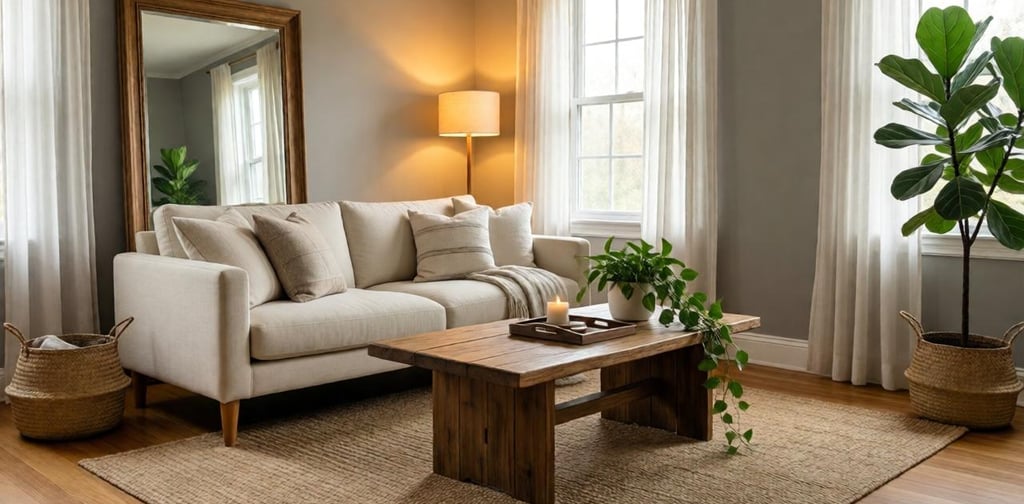
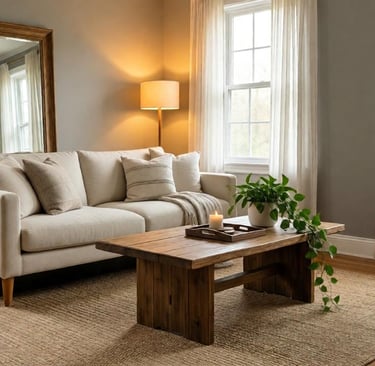
A small living room doesn't have to feel small. The way a room is furnished, lit, and styled has just as much impact on how spacious it feels as the actual square footage. Designers work with tight spaces all the time, and the results often look more intentional and polished than rooms twice the size. The difference is almost always in the decisions...what goes in, what stays out, and how everything is arranged.
Furniture Scale Is Everything
The most common mistake in a small living room is oversized furniture. A sofa that's too deep, a coffee table that's too large, or a sectional that was designed for a much bigger space will make a small room feel cramped no matter what else you do. Scale is everything.
Look for sofas with a tighter profile...shallower seat depth, legs that lift the piece off the floor, and a lower back that doesn't visually cut the room in half. Furniture with exposed legs creates a sense of airiness because you can see floor underneath, which makes the room read as larger. Pieces that sit directly on the floor feel heavier and take up more visual space even if the footprint is the same size.
Resist the urge to fill every corner. Empty space in a small room is not wasted space...it's breathing room, and it's what keeps the room from feeling cluttered.
Choose a Sofa That Works With the Room, Not Against It
In a small living room, the sofa is usually the largest piece of furniture and the one that sets the tone for everything else. A sofa in a light neutral...warm white, cream, soft greige...will recede visually and make the room feel more open. A dark sofa can work beautifully but requires more intention with the rest of the room to avoid feeling heavy.
Avoid sofas with bulky rolled arms or oversized cushions. A cleaner, more streamlined silhouette takes up less visual space even at the same physical size. Track arms, tapered legs, and a lower profile all read lighter in a tight room.
Use a Rug to Define the Space
One of the most counterintuitive truths about small rooms is that a larger rug almost always looks better than a smaller one. A rug that's too small makes the furniture look like it's floating and actually makes the room feel more cramped. A rug that's properly sized anchors the seating area, defines the space, and gives the room a sense of purpose and intention.
In a small living room, aim to get at least the front legs of every seating piece onto the rug. All four legs on the rug is even better if the size allows. The rug should be large enough that it feels like the floor of the room rather than an island in the middle of it.
Light colored rugs with low pile work best in tight spaces...they reflect light, keep the floor from feeling heavy, and make the room breathe.
Let Light Do the Heavy Lifting
Natural light is the single most powerful tool you have in a small room. Keep window treatments simple and light...sheer panels, light linen, or nothing at all if privacy allows. Heavy drapes that block light or cover a large portion of the window make a small room feel closed in.
Hang curtains high and wide...closer to the ceiling than the window frame, and extending several inches beyond the window on each side. This makes the window look larger and draws the eye up, which adds perceived height to the room.
For artificial light, avoid relying solely on overhead lighting. A single overhead fixture flattens a room and emphasizes its limitations. Layer in floor lamps, table lamps, and if possible a wall sconce or two. Multiple light sources at different heights create warmth and dimension that make a small room feel intentional rather than cramped.
Keep the Color Palette Cohesive
Too many colors in a small room create visual noise that makes the space feel busier and smaller than it is. A cohesive palette of two or three tones...with variations in texture rather than color...keeps the eye moving smoothly through the room rather than jumping from one thing to the next.
Light, warm neutrals on the walls open a room up significantly. If you want color, introduce it through pillows, a throw, or a single accent piece rather than committing an entire wall or large piece of furniture to it. You get the visual interest without closing the room in.
Use Mirrors Strategically
A well-placed mirror is one of the oldest tricks for making a small room feel larger...and it works. A large mirror on a wall opposite a window reflects natural light back into the room and creates the illusion of depth. It essentially doubles the visual space without adding a single square foot.
The mirror needs to be substantial to make an impact. A small decorative mirror won't do much. Look for something large enough to reflect a meaningful portion of the room...leaned against a wall, hung at full height, or positioned directly across from your best light source.
Edit Ruthlessly
In a small living room, clutter is the enemy. Every extra object, unnecessary piece of furniture, or decorative item that doesn't earn its place makes the room feel more compressed. The goal is not a bare, empty room...it's a room where everything present has a reason to be there.
Consider each piece honestly, does it add something meaningful...function, beauty, or both? If it isn't earning its place, let it go. A small room styled with restraint and intention will always look better than one that's been filled up in an attempt to make it feel more complete.
Small living rooms done well have a quality that larger rooms sometimes lack...they feel cozy, considered, and personal. The constraints force better decisions, and better decisions make for better rooms.

Three Homes Design participates in various affiliate marketing programs, which means we may earn a commission on products purchased through our links at no extra cost to you.